These Are The Voyages Of Dayton Ward!

By John A. Wilcox

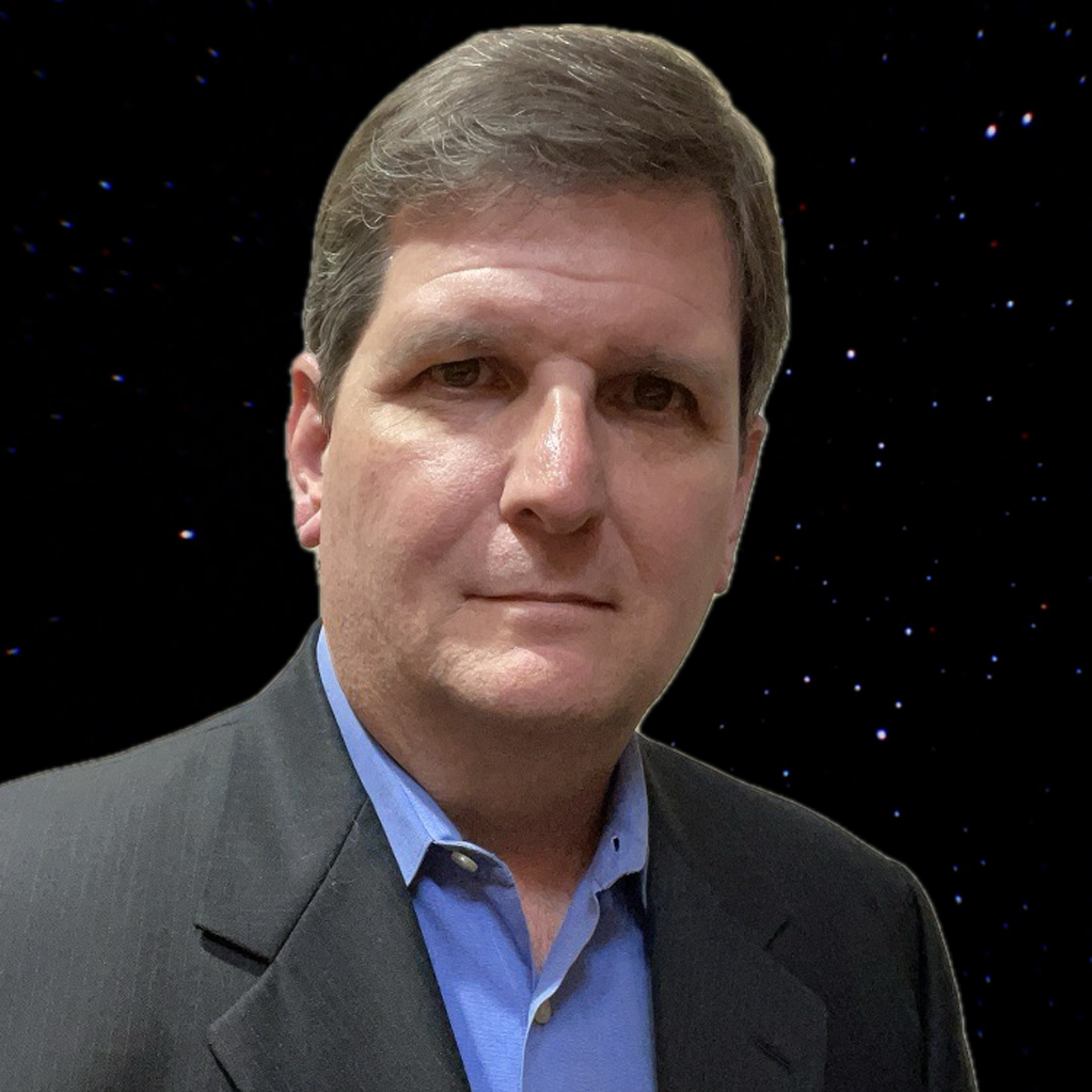
As you all know, dear friends, I love me the Star Trek in all of its iterations. So does best selling author Dayton Ward who has penned many Trek novels in his day. I asked him if he might be willing to submit to my questioning and he rather selflessly agreed! Quite a nice guy! Interview? Make it so!
PS: You mentioned that you are finishing up a new novel. If it's Trek-related, what era of Trek & when can we expect it?

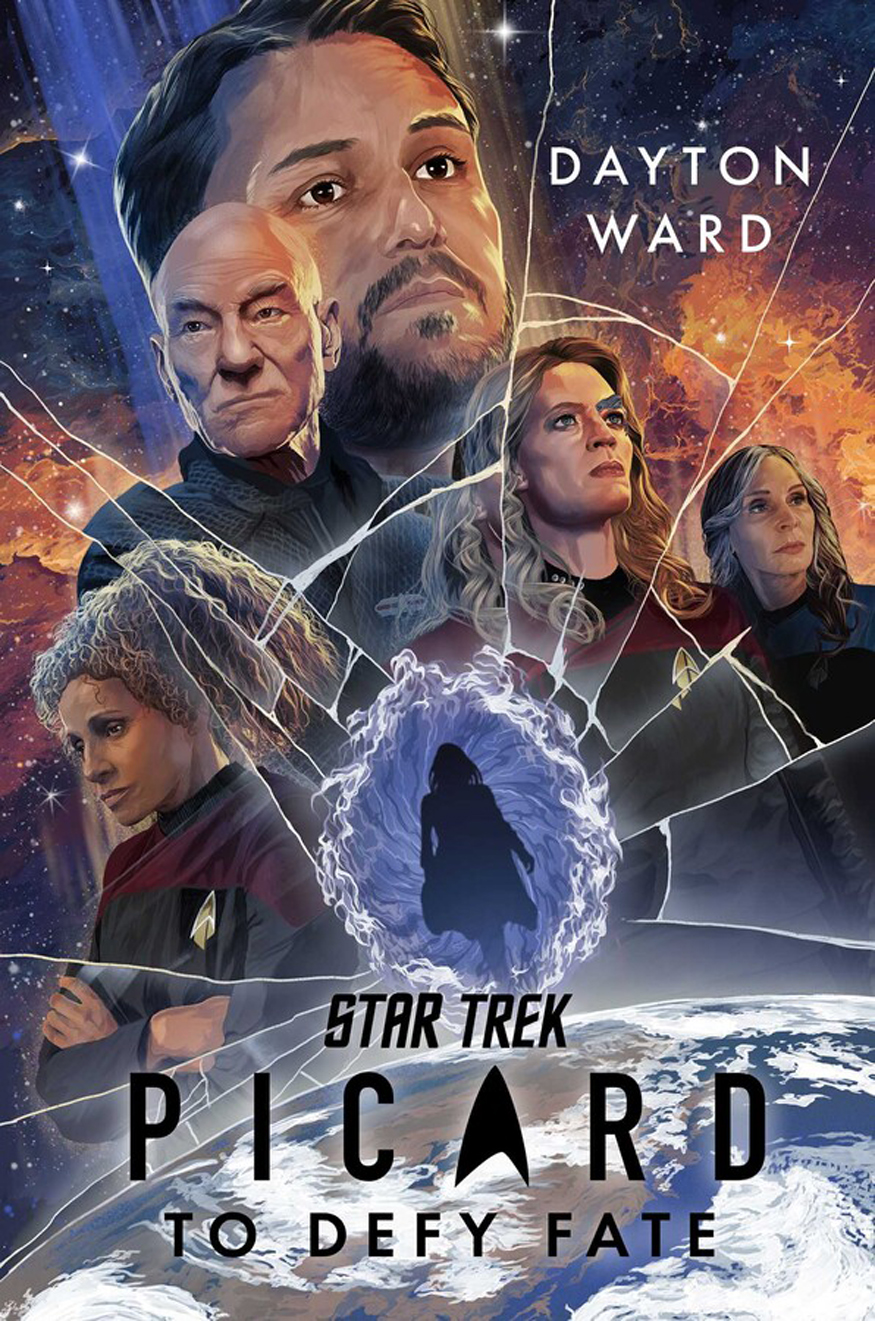
DW: It’s a Star Trek: Picard novel titled, To Defy Fate, and it’s currently slated to be published in April 2026. As of this writing, I’m not really cleared to say much else about it, other than it does take place after the main events of Picard’s third season, but before that one-year jump at the very end of the series finale where we see Captain Seven of Nine and Commander Raffi Musiker along with Ensign Jack Crusher on the bridge of the newly rechristened U.S.S. Enterprise NCC-1701-G. Since the cover’s been revealed, I can safely tell you that Wesley Crusher, Traveler Dude, features very prominently in the story. Other than that? Stay tuned!

PS: What first drew you into the Star Trek universe & what made you want to write about it?

DW: I’ve been a Star Trek fan for as long as I can remember. In the early-mid 1970s, I used to watch reruns of the original series after school and—depending on the time of year—Saturdays when local TV stations ran episodes along with those from other older science fiction series like Lost In Space, Voyage To The Bottom Of The Sea, and so on. I grew up reading the odd Trek comics and books that were available in those days, playing with the toys, you name it. By the time Star Trek: The Motion Picture came along, the hook was set for good. I continued to collect the novels and other books as well as whatever comics came along (Marvel, DC, Malibu, Marvel again, Wildstorm, and now IDW).

Interestingly, there was a time when I started falling away from the Star Trek novels because I felt like many of them were becoming formulaic, which I didn’t know at the time was apparently due to very stringent requirements and constraints placed upon the “expanded universe” material. For fun, I tried my hand at writing my own Star Trek stories, not with any intention of seeing them published but more as an experiment to see if I could do it. I found I enjoyed the writing process and in particular writing Star Trek characters, but even at that point I never had any serious thoughts about professional publication. That was something real writers did, you understand.

Then in the mid-1990s, I took up a position moderating Star Trek message boards on the old America Online service; specifically, those dedicated to novels, comics, and other publications. I was introduced to John Ordover, who at that point was one of the editors overseeing Star Trek books published by Simon & Schuster. At some point early in 1997, John announced S&S was hosting a contest and inviting non-professional writers to submit their own Star Trek short stories to be considered for publication in a new anthology, Star Trek: Strange New Worlds (not to be confused with the similarly named Paramount+ show). Writers who’d sold fewer than three short stories in professional-paying markets were eligible to submit a story conforming to the guidelines S&S had put together. At the urging of a friend on AOL, I submitted a story to that first contest and lo and behold, mine was one of 18 stories selected for the anthology. Now that I’d gotten a taste of the apple (so to speak), I attempted to sell short fiction to the magazines of the day: Analog, Asimov’s, The Magazine of Fantasy and Science Fiction, and so on. While I didn’t have any luck landing stories with those publications, I also submitted stories to each of the next two Strange New Worlds writing contests. I sold stories for the second and third anthologies, at which point I’d rendered myself ineligible to submit to any future contests. John Ordover called me to notify me of my third win, at which point he asked if I might be interested in writing a full-blown Star Trek novel for him. That was in 1999. I’ve been writing Star Trek fiction for S&S ever since. Along the way, I’ve added additional Star Trek writing to the mix, in the form of magazine articles, trading cards, other books like a pair of Star Trek-themed “travel guides” and a manual devoted to Captain Kirk’s “unique” fighting style, and material for the Star Trek Adventures roleplaying game. It’s been a weird journey, to be sure.

PS: Have any of the actors who portrayed characters you've written ever given you feedback about how you wrote their character?

DW: I can’t honestly say that’s happened. I know Wil Wheaton was aware of how we were portraying Wesley Crusher in the novels and in particular the Star Trek: Coda trilogy developed by David Mack, James Swallow, and myself and in which Wesley plays a significant role. Someone told me he’d mentioned those specific books and he was looking forward to reading them after his episodes on Star Trek: Prodigy aired. I don’t know if he ever had the chance to do that.

PS: Have any elements from your novels become canon in the Trek TV/film universe?

DW: Nothing of my own creation. Greg Cox, David Mack, Kevin Dilmore and I came up with Una Chin-Riley’s first name back in 2016 for the Star Trek: Legacies trilogy we were writing for Star Trek’s 50th anniversary, and they adopted it for Star Trek: Strange New Worlds. That’s as close as I’ve gotten to that particular brass ring!


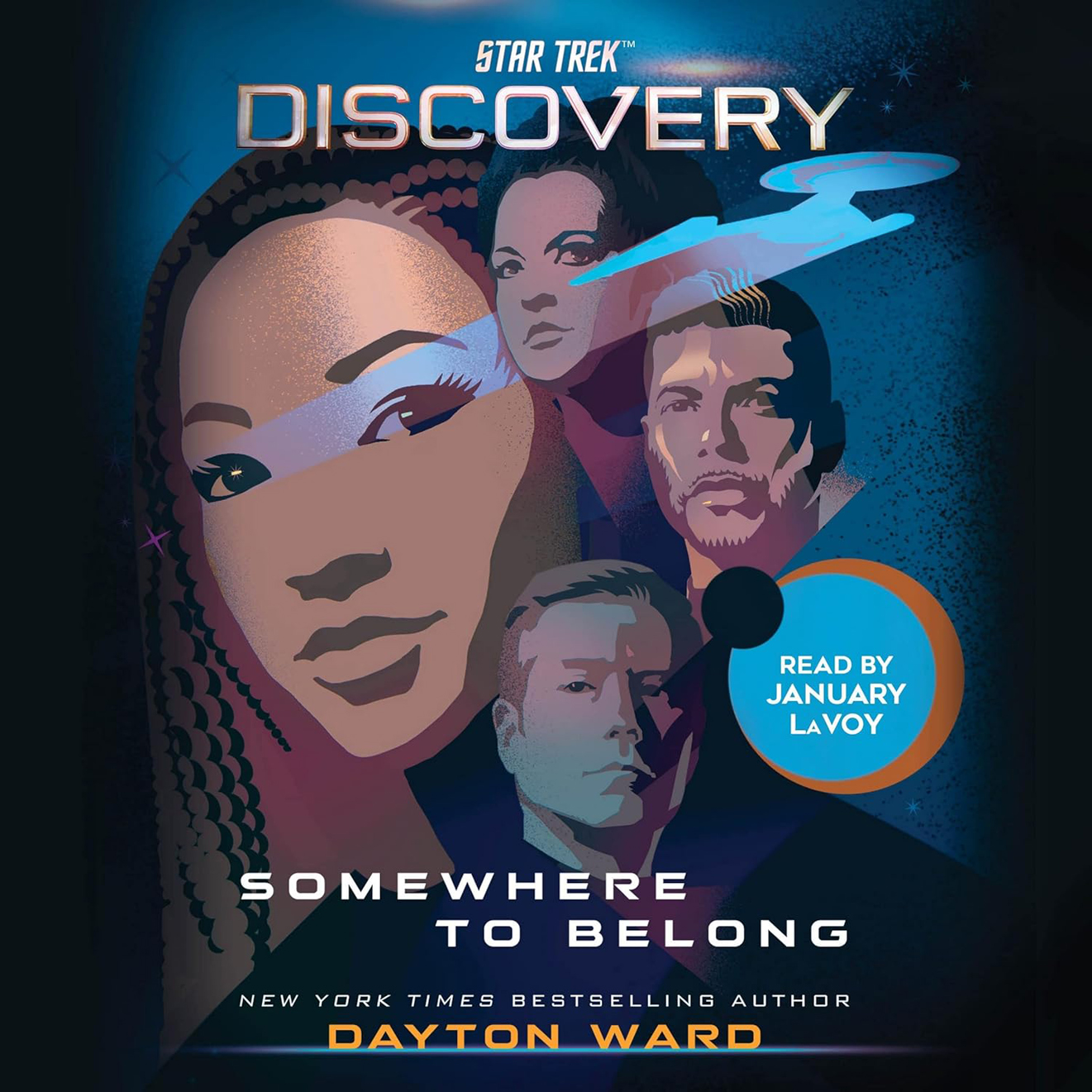
PS: With Drastic Measures & Somewhere To Belong, you covered both ends of the Discovery timeline. What did you enjoy most about writing those characters?

DW: With Drastic Measures, I got to do something that hasn’t (yet?) been repeated: writing the only story that features the “prime universe” version of Captain Lorca! Not even the series itself did that, which I think we can all agree is a little weird, right? I started writing that novel while the first season was in production, and even before they’d cast Jason Isaacs to portray Lorca. At least with Philippa Georgiou, I had some idea of how the “real” version of her should be written based on her appearance in the first two episodes. By the time I found out about Isaacs, I’d written maybe twenty percent of the book and then had to go back and refine things here and there to better present Lorca the way Isaacs was working out how to play him on screen. That was an interesting experience, as all I had at the time were the scripts, which were changing at a fairly rapid pace, especially in the early going. I ended up writing the book without ever seeing a nanosecond of an episode.

As for Somewhere To Belong, there I had the benefit of the first four seasons, and I was reading the fifth season scripts. By the time I took on developing that novel, I’d watched each of those released seasons at least twice (the first time on Paramount+, then again when the Blu-ray sets dropped…at least in the case of the first three seasons). It was while watching season four for the second time that I saw what became one of the book’s narrative hooks: the crew finally having some chance to come to terms with their new reality after jumping to the far future. The third season didn’t really give them the opportunity to do that, as it hit the ground running and never really let off the gas. Then, when the fourth season starts, it’s as though everyone has adjusted and I’m yelling, “WHAT?!? You skipped over all of that? All of those little, personal moments? All of those churning emotions? The homesickness? The second thoughts? Regrets? Dude.” I asked to set the novel between the two seasons so I could play with all of that, and both my publisher and Paramount along with Secret Hideout were very happy with that idea and let me run with it. Discovery is a show where the characters wear their emotions on their sleeve, or at least more so than most of the other Star Trek series, so to me it made for a natural fit so far as the story I ended up developing.

PS: To date, Somewhere To Belong is the last ST: Discovery novel. Do you know if they have more books in mind, or is the feeling that they are done with it for now?

DW: I honestly have no idea. I’d like to think there’s an opportunity to push the crew and the setting into those periods of time before and after the flash-forward we see in the series finale. I suppose if there’s enough fan demand, we may see something like that, if not in the books than perhaps some other medium like the comics.

PS: I'd like to get your thoughts on a few characters as to what makes them tick. Let's start with Pavel Chekov.

DW: Star Trek, particularly the original series, has a tendency to treat ensigns like enlisted military members—we see them tending to various “hands-on” or “manual labor” type tasks which wouldn’t be there purview in a modern military, for example—but the writers managed for the most part to insulate Chekov from that sort of thing. As portrayed on the original series, he comes off as a bright, enthusiastic young officer. He’s also a bit brash, with the whole “_____ was invented in Russia” recurring joke, but it’s a good way that contributes to morale, getting a chuckle out of people, that sort of thing.

Due to the episodes airing out of order, his first appearance is in Amok Time where he’s shown at the navigator’s position, but in the first episode to be filmed with him as part of the cast was Catspaw, where we see him at the science station while Spock’s down on the planet. Though they never come out and say it, I always took that to mean Chekov was cross-training at different station around the ship, and the reason we see him at the science station at multiple occasions is because Spock has seen his potential and taken him under his wing, so to speak. As his role shifted to security by the time of the movies, I always saw that as an extension of his broad range of interests, along the lines of how Sulu also had a variety of hobbies and fields of study on the original show.


PS: William Riker.

DW: Fathers and sons, am I right? I get a lot of what seemed to drive him through most of The Next Generation’s TV seasons. He didn’t get along with this father, but still seemed to take on challenges and risks and focused on his career as if seeking his father’s approval. Then, even if he got some of that acknowledgement he thinks he wanted, he’s just as liable to tell his father to pound sand. Man, can I relate to that, as I also had an oftentimes tumultuous relationship with my own father, who cast a long shadow and laid out what I thought was an example of the sort of man I wanted to be. Like Riker did with his own father, I came to realize my father was a flawed man who tried to be decent and who imparted to me values I still hold dear, even as he more than occasionally failed to live up to the same standards he set for me. That didn’t make him a bad person, but it did make me recognize I didn’t necessarily want to emulate him in all aspects of my own life. Weird, right?

PS: Ezri Dax.

DW: We already knew that Jadzia was much different than her predecessor, Curzon, even though the latter’s joining with Dax showed us that a Trill host has access to all of the memories of those who previously hosted their symbiont. With Ezri, the writers introduced a new wrinkle by having Ezri not at all prepared to carry out the duties and responsibilities of being a host. Thrust into this situation, she has no choice but to make it work lest it negatively affect not just Dax but herself, as well. Perhaps it’s because she trained as a counselor that she was perhaps better able to adapt to the insane situation in which she finds herself, and that’s before we remember she, too, has all the memories of Dax’s prior hosts on which to draw. Still, here she is, doing what she can to assist others with their own mental and emotional wellbeing while struggling to understand her own identity and sense of self. Ezri’s personality isn’t nearly as outgoing or confident as Jadzia’s, which likely presents its own complications as she compares herself to her predecessor hosts.

PS: Sylvia Tilly.

DW: She’s something of a contradiction at first glance, right? At first blush, you can’t help thinking she ended up on Discovery by mistake. Indeed, you might wonder how she even made it through Starfleet Academy. She’s kind and caring almost to a fault, but also very driven in pursuit of her various goals. Sometimes that drive manifests in various degrees of awkwardness, but that seems to come from her desire to excel while staying true to her nature. When she focuses on the task in front of her you know she’s “all go, no quit” until she does whatever it is she’s set out to do, but she won’t do anything that might smack of taking advantage of or otherwise hurting anyone else along the way.

PS: Who have you found to be the most difficult Trek character to write?

DW: Interesting question. I’m fairly comfortable writing the original series and Next Generation characters, likely because that’s where I’ve done a lot of my Star Trek writing. I struggled a bit with Garak while writing Pliable Truths, because I was unconsciously writing him as “latter seasons Garak,” who had become more familiar to Sisko and the other characters, rather than the way he was closer to the beginning of Deep Space Nine when he was presented as more of a question, mystery, riddle, mass of contradictions…however you might want to describe him in those “early days.” This apparently was evident to my editor even at that novel’s outline stage, as she made that note during her review. As a consequence, I found myself second-guessing myself in every scene I wrote where he appears. I kept going back over what I’d written, trying to decide if I made him out to be more like that “enigma” he was back when only Julian Bashir seemed to make a connection with him.

To a lesser extent, I has a similar issue with writing Odo in that same novel. Again, and without realizing it, I was infusing him with traits and responses that would be more natural from him in the latter part of the show, after he gains so much more knowledge about who he really is and where he comes from and in turn becomes more comfortable with who he is. Once again, my editor caught me during her review and had me go back and revisit those parts.


PS: You seem mighty fond of Gary Seven. What about that character appeals to you?

DW: I’ve always been a fan of time travel stories, Star Trek and otherwise. As far back as I can recall, Assignment: Earth was one of those episodes that stuck with me. It was only later when I started reading books and magazine pieces about the making of the original series that I learned Gene Roddenberry had wanted to make a standalone (and later a Star Trek spin-off) Assignment: Earth TV series, with more missions about Gary Seven on Earth. The idea that there’s this guy, sent by aliens to sort of keep an eye on things here as we humans navigate whatever turbulent events lay in our future over the coming decades and even centuries, as always fascinated me. I also find it interesting that they dove into Roddenberry’s archive after his death and reworked a couple of his original concepts for television series (Earth: Final Conflict and Andromeda) into shows that each ran for several seasons, but somehow Assignment: Earth remains in the files. I suppose with Paramount+ making all of these new Star Trek TV series, there’s always a chance Gary Seven might show up somewhere.

As for me, what renewed my interest in the character was his appearance in a few issues of DC’s Star Trek comics in the early 1990s, followed by Greg Cox’s Star Trek novel Assignment: Eternity and especially the two novels that make up The Eugenics Wars: The Rise And Fall Of Khan Noonien Singh. The latter two books really grabbed by attention when they were first published. I absolutely loved the way Greg wove Star Trek’s version of historical “facts” from the late 20th Century into our real history. Sure, the blending doesn’t always hold up now, twenty-five years after the books were published and all the things that have been added to the lore and the “canon” since then, but they remain among my very favorite Star Trek novels.

My first brush with this notion was with the short story I wrote for the third Star Trek: Strange New Worlds contest, The Aliens Are Coming! Here, I put forth the idea that James Wainwright, the Air Force captain from 1947 introduced in the DS9 episode Little Green Men, had gone on to participate in Project Blue Book, and by the year 1969 and still working with that program, came to learn about Captain John Christopher’s encounter with a “UFO” (the original Star Trek episode Tomorrow Is Yesterday). I have a scene at the end of that story with Gary Seven and Roberta Lincoln, and at the time it was just a one-off tale I submitted to the third Star Trek: Strange New Worlds writing contest in 1999.

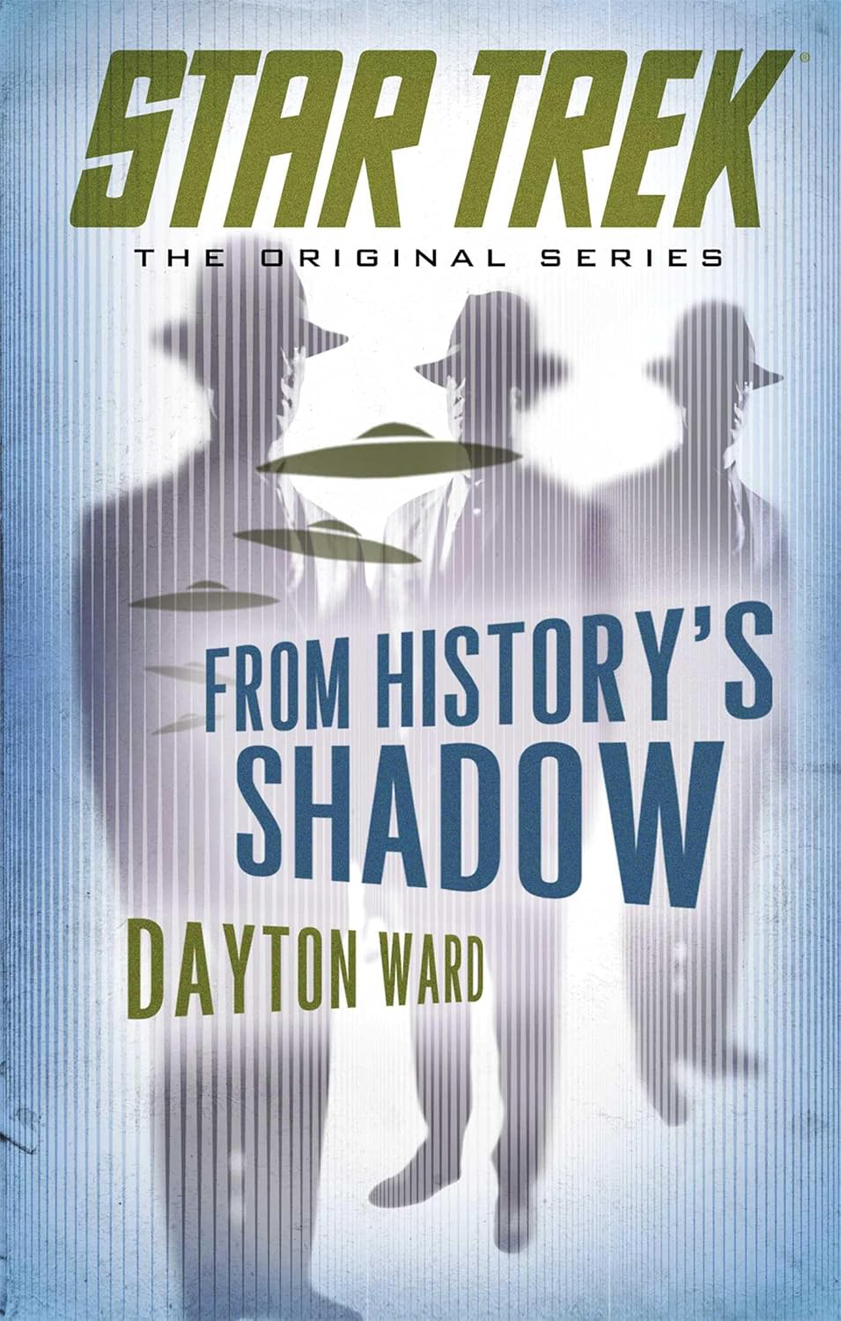
Later, after I’d been writing Star Trek novels for a bit, I started playing with the idea of expanding that initial idea into a much larger idea, which could touch on a variety of topics and plot points involving Star Trek lore, UFO conspiracy theories, actual history relating to Project Blue Book, the Cold War, and the 1950s and 60s space program. I decided I wanted to explore the idea of agents who preceded Gary Seven working on Earth, and leading up to the point he arrives and takes Roberta Lincoln under his wing. As I mentioned earlier, I was a big fan of the books Greg Cox wrote featuring Seven and Lincoln and so I wanted to make sure this novel idea of mine worked in concert with what he’d established. That idea became From History’s Shadow, published in 2013. My editors were kind enough to let me play a bit more in that sandbox with 2016’s Elusive Salvation, and Hearts And Minds in 2017. Now that on-screen Star Trek has linked Wesley Crusher and his Traveler persona to the group that sent Gary Seven and other agents like him to Earth, it opens up new possibilities so far as this little corner of Star Trek storytelling, and yeah…you bet I’m up for playing some more in that space.

PS: What era of Trek appeals to you most?

DW: The original series has always been my favorite. It’s the one I grew up with, and it’s the first one I think of when I think of Star Trek. Whenever I’m asked to write a new Trek novel and I’m not given specific direction so far as which series, I almost always begin pondering ideas for Kirk and the gang.BR>
That said, I’ve also had a long fascination with that period between “now” and what we eventually see with Star Trek: Enterprise. When we first heard about that series, it was described in some circles as Star Trek’s version of The Right Stuff, and I so badly wanted a show like that. Not just the period between humanity’s first contact with Vulcans and the years leading up to the Enterprise NX-01’s launch, but also those 21st Century space missions which have been mentioned or even just hinted at in various episodes. We didn’t really get The Right Stuff, though a couple of Enterprise episodes did mention or offer flashbacks to that sort of thing. For me, that remains an untapped era where I’d love to play if opportunity should present itself.

PS: What are the biggest personality differences between Kirk & Picard?

DW: I suppose the easiest distinction to make is that to the casual observer, Kirk—specifically the Kirk of the original TV series—comes off as more impulsive and perhaps even reckless when it comes to arriving at decisions and turning ideas into action, whereas when we meet Picard on Next Generation he’s already a starship captain with decades more experience than Kirk. He’s more seasoned and has seen more triumph and perhaps more tragedy than Kirk, and so he’s therefore more deliberate when facing difficult situations and crises. By the time we get to the films with the original series cast, Kirk has tempered some of his more brash impulses but he’s no less passionate about the safety of his ship and crews. Interestingly, when we first meet Picard he seems far more aloof when it comes to his relationships and interactions with the crew, but as the years pass he allows himself to lean into those friendships, and by the events of the Next Generation films and Star Trek: Picard, he treats Riker and the others as his own extended family.

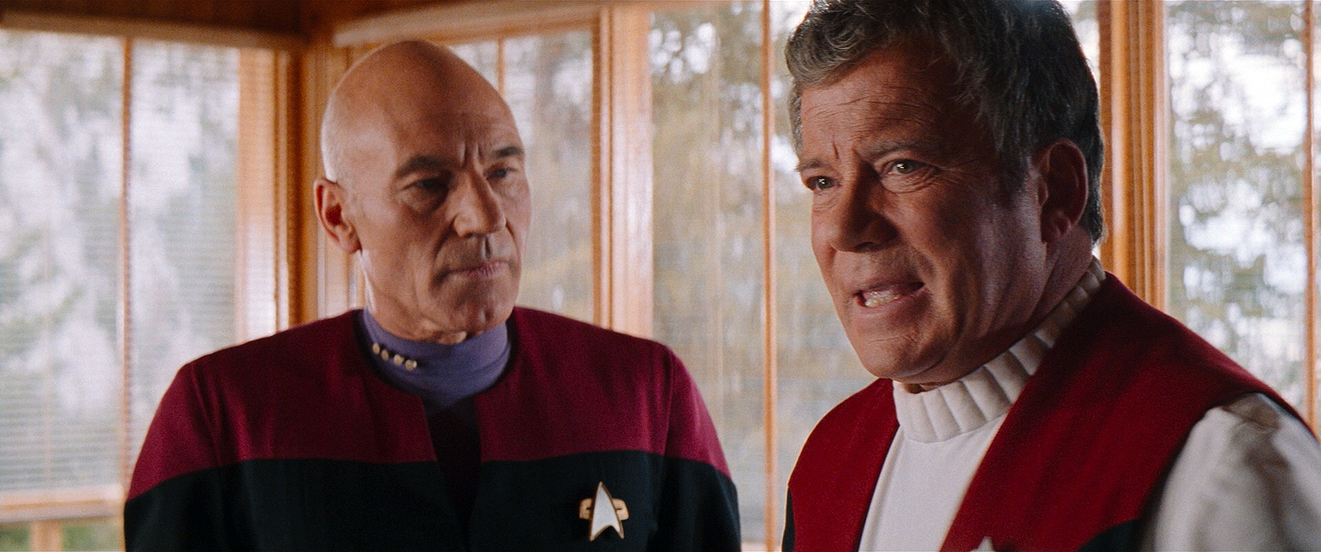
There’s been a bit written about how when the Next Generation cast moved from TV to film, Picard himself “transformed” from the captain who stays on the ship while Riker commands the away teams to “action hero.” In my head canon, it’s that conversation Picard has with Kirk in Star Trek Generations that sets the stage for this change:

Kirk: Captain of the Enterprise, huh?
PICARD: That's right.
KIRK: Close to retirement?
PICARD: I'm not planning on it.
KIRK: Let me tell you something. Don't. Don't let them promote you. Don't let them transfer you. Don't let them do anything that takes you off the bridge of that ship, because while you're there, you can make a difference.


Of course, Picard uses those very sentiments to convince Kirk to help him stop Soran, but for me that’s the reasoning he uses going forward. He’s no longer content to stay on the ship and send others into harm’s way. He’s also no longer worried about promotion, satisfied instead to remain in command of a starship and pursue the same opportunities and experiences which have always driven him. He took to heart that advice offered by Jim Kirk.

PS: What do you see as the major weaknesses of Starfleet and the Federation?

DW: I don’t know if I’d go so far as to call it a weakness, but the Prime Directive has to be one of the more contentious notions, yes?
On the surface and even at its heart, you can understand the idea behind it: Don’t interfere with other cultures. Don’t try to impose your ideals or will against another group. Don’t expose a society to technology and information about their true place in the universe until they’re ready to understand and accept it, but who makes those decisions and what is the criteria? In Next Generation and the shows that followed, the writers tried to explore the various nuances of the Prime Directive and what—precisely—constituted following it or violating it. They usually did so by showing the characters breaking the rules in some fashion…most of the time for what we’re told are “the right reasons.”

It’s interesting when we consider how Earth managed to climb out of the pretty deep hole it dug for itself by the second half of the 21st Century. They had help from the Vulcans, of course; maybe not as much as they wanted or less than the Vulcans themselves were willing to give. Still, they did have that help and it came at a pivotal point in human history through what essentially was a fluke event with Zefram Cochrane’s warp flight. Star Trek had already previously established that achieving faster-than-light travel was an essential if not the essential technological milestone to be reached before the Federation might lift the Prime Directive and initiate first contact, but common sense tells us there has to be other criteria factoring into that decision. Has the planet’s population achieved some measure of global peace, if not a unified society? That sort of thing. It doesn’t seem to have been a deciding factor when the Vulcan ship arrives on Earth, and many of the details are still fuzzy so far as how exactly humans get their act together in the wake of first contact, but it stands to reason they had assistance from the Vulcans. So, why then does the largely human-led Federation seem to take a more rigid stance when it comes to how they view “lesser advanced” societies? Given how humans were only a decade or so beyond a global conflict and we have no idea what the rest of Earth is doing in that aftermath, it seems odd that we still ticked off enough boxes for the Vulcans to come calling. Did they see some potential in humanity that might not be obvious to a more casual observer? It’s an interesting bit of hypocrisy to consider when thinking how the Prime Directive seems to be applied, isn’t it? In some ways, I suppose this also bumps up against a perceived problem with Starfleet and to a much larger extent the Federation itself: a seeming air of superiority, at least it the eyes of civilizations they’re meeting for the first time. You have to wonder if, after a newly contacted society learns about Earth history, if its people don’t look at humans with their version of side-eye. You figure there has to be at least one stand-up comedian in the Star Trek universe mining that sort of things for laughs.

PS: Why do mirror universes seem to appeal to Trek writers so much?

DW: I think the easy answer is it gives the writers (and the actors, if we’re talking about on-screen Trek) a chance to break away from the norm, so to speak. Depending on how the story and their individual counterpart is portrayed, it presents a tantalizing opportunity to explore different facets of a character we think we know, even if it’s really an “alternate reality” version of that character. I’ve only had limited experience working in this space, but that was certainly a point of discussion when we were working out how to portray the Mirror Universe version of Hoshi Sato and other Star Trek: Enterprise characters in our novel Age Of The Empress. We were working off an outline by Enterprise writer Mike Sussman, and of course he had already established some of those character differences in the two-part In A Mirror, Darkly episode he wrote for the show, but with the novel providing more room to play than you get from the script for a typical television episode, my writing partner, Kevin Dilmore, and I spent a good bit of time talking about how we could push and pull the idea in different directions. How “evil” do we make the “evil version” of a known character? How far could we push things? Do you lean into the idea that on some level, this alternate version still has key traits they share with the one we know from “our” reality? I’ve always felt like simply having a Mirror character be the complete opposite of their “prime universe” counterpart is a bit lazy and uninspired. It can work in certain circumstances, sure, but I find it more interesting to explore where the similarities are. When push comes to shove, is there some key aspect of their personality that is a constant across the different realities, even if there’s still a bit of nuance that’s a product of their respective reality? Kevin and I also had fun exploring those ideas, and figuring out how they might factor into the story we were trying to tell.

PS: Who would you consider to be the 6 most overlooked characters in all of Star Trek and why?

DW: This is an interesting question, because one of my favorite things about Star Trek: Strange New Worlds is how it’s given us this tremendous fleshing out of Christine Chapel and Dr. M’Benga, both of whom of course we know from the original series. I absolutely the backstory the writers gave these characters and how they have this shared history most of their shipmates (okay, the main cast) except perhaps for Ortegas and La’An just can’t fully understand. Taking two familiar yet largely undeveloped characters and fleshing them out in such an interesting way is one of the newer show’s best creative choices. I don’t know if my own selections would benefit from the sort of broadening we’ve seen with M’Benga and Chapel, but these are some characters I’d like to see revisited and enhanced in some fashion:

Reginald Barclay – We see his character get a nice bit of redemption on Star Trek: Voyager as he became such an integral part of making contact with Captain Janeway and her crew and later helping to get them home. We don’t see him again after the Voyager series finale, and I’ve occasionally wondered what he got up to after that. He didn’t appear in Lower Decks, Prodigy, or Picard, so he’s still kind of an open book while possessing an atypical skill set you’d think would come in handy every once in a while.


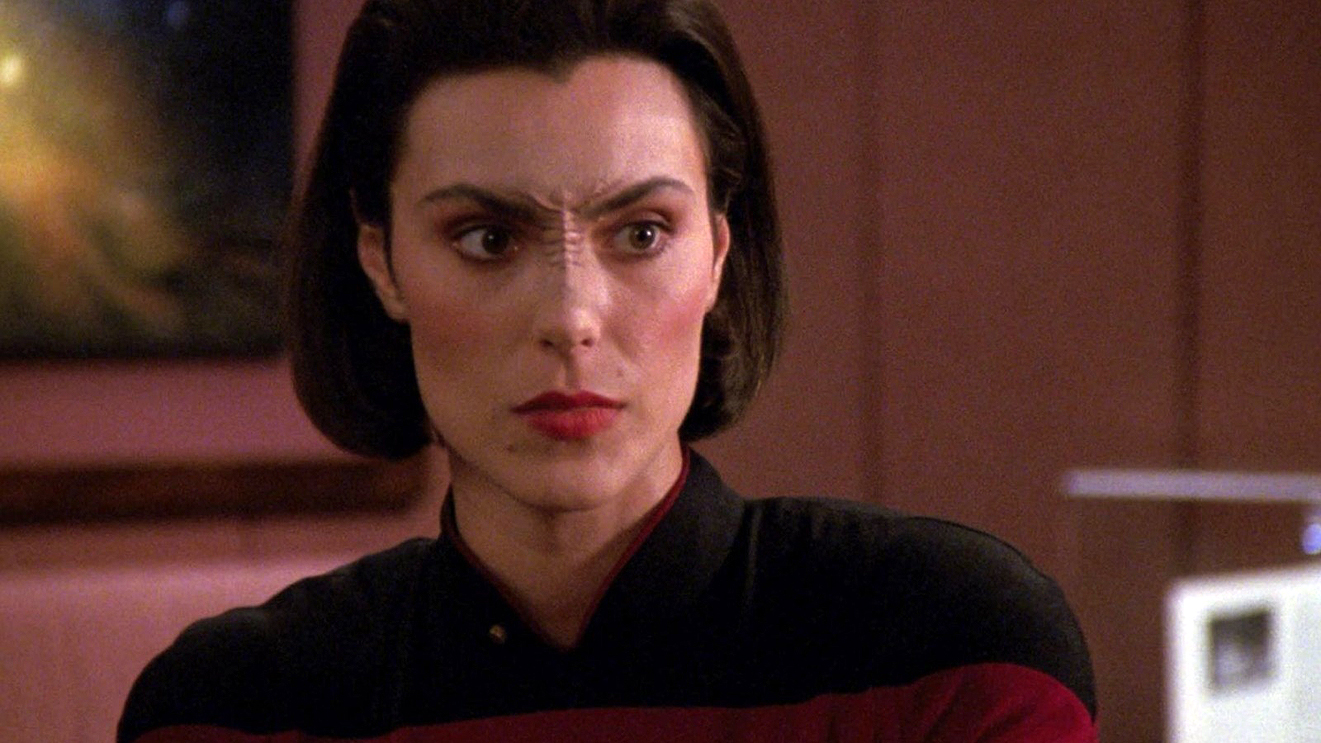
Ro Laren – I’ll say it: Ro got done dirty. She’s one of the best recurring characters from Next Generation and bringing her back offered all sorts of interesting possibilities. She could have shown up on Lower Decks or Prodigy, or they could have given her a different fate in Picard. I’ve given serious thought to how she could have survived the events of Picard season 3, and what she might have done after all of that. Okay, part of this is driven by the fact that I’m a huge fan of Michelle Forbes, but the Ro character has always had the potential for so much more than what we were given for her onscreen appearances. She thrived in the novels written after Next Generation ended and before the Picard series was a glimmer in anyone’s eye, and Star Trek has already brought back characters who seemed to leave us under circumstances far hinkier than what we saw with Ro. This is an easy fix (he says, punctuating his statement with a mischievous laugh).

Rain Robinson – Going back to my ongoing fascination with the idea of Gary Seven and everything connected to him, here’s another character who’s a part of that. Greg Cox originally had the idea of connecting Rain to Seven and Roberta Lincoln in his Eugenics Wars novels, and I simply went with that when I wrote my novels with those characters. I knew it was a long shot that she might appear in the 21st Century parts of Star Trek: Picard’s second season, but I do have thoughts on how she might fit in with what’s been added to the canon for that time period since I wrote my books.

Saavik – We don’t see or hear of her ever again after Star Trek IV: The Voyage Home, at least on screen. The idea of her being half-Vulcan and half-Romulan is certainly never explored, and given Vulcan/Romulan life spans you’d think she was at least a candidate for showing up in any of the series set in the 24th Century. Expanded universe material (novels, comics) have explored her here and there, but there’s still potential for her to show up somewhere depending on which direction future Trek screen projects decided to go. Did she leave Starfleet at some point, and if so then why? What did she do after that? Did she survive to see the Romulan supernova, and did her Romulan heritage drive her to want to help with the evacuation and relocation efforts? Maybe she helped Spock with his reunification efforts on Romulus. Who knows?

Mestral – Introduced in the Star Trek: Enterprise episode Carbon Creek, he’s one of the Vulcans who crashes on Earth in 1957, and the one who elects to stay behind at the end of that episode. Like Rain Robinson, he’s one of those characters I’ve played with in novels I’ve written and I’ve always felt like there were last a couple of decent opportunities for him to show up in the years after that story. Even if it’s practical on one of the TV shows, books and comics are perfect for this sort of thing.

Kovich – He was one of the more interesting characters Star Trek: Discovery introduced during its third season, and him being “Crewman Daniels” from Star Trek: Enterprise is certainly an interesting twist. Given my "fetish” for all things Star Trek time travel-related, you had to know this is someone I’d love to see show up again. The forthcoming Starfleet Academy series seems like a possibility, but I have no idea if they’re even thinking in the direction of anything that might involve time travel. That said, I’ve learned that when it comes to this business, you never say, “Never.”

PS: Speaking strictly of TV episodes, what are your Trek favorites from any era?

DW: Good grief….we could be here a while. I’ll try to keep it under control. Examples off the top of my head and not meant to be inclusive: • From the original series: Balance Of Terror, Arena, Tomorrow Is Yesterday, Space Seed, The City On the Edge Of Forever, The Doomsday Machine, Assignment: Earth, The Enterprise Incident, All Our Yesterdays
• TNG: The Measure Of A Man, The Enemy, Yesterday’s Enterprise, Sarek, The Best Of Both Worlds, Family, The Drumhead, Ensign Ro, Cause And Effect, The First Duty, The Inner Light, Relics, Chain Of Command, Tapestry, The Pegasus
• DS9: Captive Pursuit, Duet, Blood Oath, The Wire, Tribunal, Civil Defense, Past Tense, The Adversary, Starship Down, Little Green Men, The Ship, Trials And Tribble-ations, Far Beyond The Stars, In The Pale Moonlight, Valiant, The Sound Of Her Voice, The Siege Of AR-558
• VGR: Eye Of The Needle, Learning Curve, Future’s End, Distant Origin, Worst Case Scenario, Year Of Hell, Message In A Bottle, Living Witness, Timeless, Bride Of Chaotica, Relativity, Pathfinder, Memorial
• ENT: Carbon Creek, Minefield, Future Tense, Regeneration, First Flight, Twilight, In A Mirror Darkly, Demons, Terra Prime

As for the newer shows, I haven’t yet had the time to watch them to the degree where I can start picking out favorites by name. I’ve only got so much RAM in my head, you know, but each of the new series has definitely given me episodes I have no problem revisiting. Off the top of my head? Magic To Make the Sanest Man Go Mad or Through The Valley Of Shadows from Discovery, Stardust City Rag” and The Impossible Box from Picard, Crisis Point or First First Contact from Lower Decks, Those Old Scientists and Under The Cloak Of War from Strange New Worlds, All the World’s A Stage and The Devourer Of All Things from Prodigy. Oh, and Ephraim And Dot and The Girl Who Made The Stars from the Short Treks run. Check back in a couple of years, after I’ve had time to compile a decent list!

###


All images are copyright their respective owners.


Table Of Contents

Contact